
The way software is built is changing fast.
A new approach known as “vibe coding” is gaining traction among startups, indie builders, and even enterprise teams. It’s fast, intuitive, AI-assisted, and incredibly powerful when used correctly.
But like any powerful tool, it comes with trade-offs.
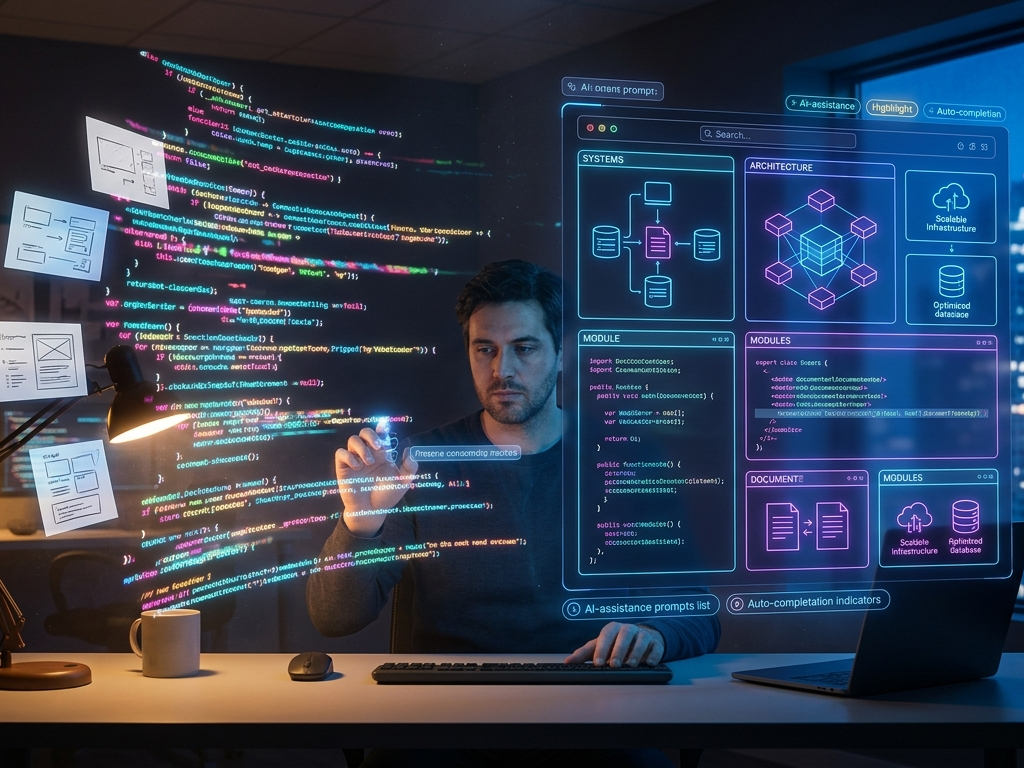
At Softmills, we’ve embraced vibe coding to accelerate product development. At the same time, we’ve learned that speed without structure can create long-term problems.
This article breaks down:
- What vibe coding really is
- Why it’s becoming popular
- The hidden risks
- And why having a strong technical partner matters more than ever
What is Vibe Coding?
Vibe coding is a modern approach to software development where builders use AI tools, low-code platforms, and rapid prototyping techniques to translate ideas into working products quickly.
Instead of writing everything from scratch, developers:
- Prompt AI to generate code
- Assemble components visually
- Iterate based on “feel” and user feedback
Think of it as:
Building software the way designers prototype; fast, iterative, and guided by intuition.
It aligns closely with lean startup thinking and rapid MVP development.
For more on how fast iteration shapes startups, see Y Combinator’s principles on MVPs and rapid experimentation.
Why Vibe Coding is Taking Off
1. Speed to Market
Startups can go from idea to MVP in days instead of months.
This aligns with the classic “build-measure-learn” loop, a principle we apply in our work at Softmills when helping startups validate ideas quickly .
2. Lower Barrier to Entry
Non-technical founders can now build real products without full engineering teams.
3. AI as a Force Multiplier
Tools like GitHub Copilot and ChatGPT allow developers to:
- Generate boilerplate instantly
- Debug faster
- Explore new architectures quickly
4. Faster Experimentation
Instead of debating ideas, teams can build and test them in real time.
According to McKinsey & Company, companies that adopt AI in development workflows significantly improve productivity and innovation cycles.
The Real Challenges of Vibe Coding
Here’s where most people get it wrong.
Vibe coding is powerful, but it does not replace engineering discipline.
1. Fragile Architecture
Code generated quickly is often:
- Poorly structured
- Hard to scale
- Difficult to maintain
Without a solid architecture, your MVP becomes technical debt overnight.
At Softmills, we’ve seen this repeatedly when reviewing early-stage products that were built fast but couldn’t scale.
2. Lack of Standards
Vibe coding often ignores:
- Coding standards
- Documentation
- Testing frameworks
Yet, implementing proper standards and processes is critical for long-term success .
3. Security Risks
AI-generated code can:
- Introduce vulnerabilities
- Miss edge cases
- Expose sensitive data
4. Scaling Problems
What works for 100 users may completely fail at 10,000.
Without proper backend design, database strategy, and infrastructure planning, scaling becomes painful and expensive.
5. False Sense of Completion
Just because something works doesn’t mean it’s production-ready.
Where Vibe Coding Fits (and Where It Doesn’t)
Best Use Cases
- MVPs
- Prototypes
- Internal tools
- Early-stage validation
- Legacy code
Where Structure needed
- Scalable platforms
- Regulated industries
- Long-term products
This is why vibe coding should be seen as a starting point, not the final solution.
How We Use Vibe Coding at Softmills
At Softmills, we don’t reject vibe coding, we embrace it strategically.
We use it to:
- Build MVPs quickly
- Validate ideas with real users
- Reduce time-to-market
- Accelerate early traction
But we combine it with:
- Strong product strategy
- Clean architecture design
- Scalable infrastructure
- Engineering best practices
Our approach is simple:
Move fast, but build on a foundation that won’t break.
Why You Still Need a Technical Partner
Vibe coding makes building easier.
It does not make building correctly easier.
A strong technical partner helps you:
- Design the right architecture from day one
- Avoid costly rebuilds
- Ensure scalability and performance
- Implement best practices early
- Balance speed with sustainability
Without this, many startups end up:
- Rewriting their entire platform
- Burning budget on technical debt
- Losing momentum at critical growth stages
Got a Project ?
Let us help
If you’re exploring vibe coding or building your next product:
Let’s help you turn speed into sustainable growth.
The Future: Hybrid Development
The future isn’t traditional coding vs vibe coding. Vibe coding is one of the most exciting shifts in software development.
It democratizes building, accelerates innovation, and empowers founders like never before.
But speed alone is not enough. The real advantage comes from combining speed with structure.
The winning teams will:
- Use vibe coding for speed
- Use engineering discipline for scale
- Combine AI with real expertise
This hybrid model is already becoming the standard. At Softmills, that’s exactly what we do:
- Build fast
- Validate quickly
- Scale intelligently